Join us each day as we focus on the final week of Jesus' crucifixion.
Good Friday. What a contradiction in terms. How can there be anything good about the beating, torture and crucifixion of of the Son of God?
Christians originally called Jesus' crucifixion day 'God's Friday' but over time the phrase was transformed into 'Good Friday.'
From 9am till 3pm, Jesus hung on the Cross. Mocked by the crowds, ridiculed by the religious leaders, and abandoned by his closest friends; Jesus felt the weight of our sins and the distance of being separated from God's love.
The suffering and agony caused by crucifixion was so intense that a whole new word was created: 'excruciating,' Latin 'of the cross.'
Our sins drove the nails, but it was love that held Him to the cross.
Showing posts with label Holy Week. Show all posts
Friday, April 18, 2014
Thursday, April 17, 2014
Holy Week 2014 -Maundy Thursday
Join us each day as we focus on the final week of Jesus' crucifixion.
Thursday of Holy Week is called 'Maundy Thursday.' The term 'Maundy' is derived from the Latin mandatum. While eating the Passover Meal with his disciples, Jesus said, 'I give you a new command (mandate), that you love one another as I have loved you.'
The central focus of Maundy Thursday is Jesus washing his disciples' feet. During the Passover meal, Jesus gets up from the table, takes off his robe, grabs the basin and begins to scrub the dust and dirt from their feet.
Jesus offers two reasons as to why he is doing this demeaning task. In John 13v15 he reminds his followers to follow his example. 'I have set an example for you that you should do as I have done for you.' Jesus wants his followers to be marked by service, humble self-sacrificial service. What strikes me about Jesus' actions is that he is also taking time to wash Judas' feet. A few days earlier Judas went to the Chief Priests in order to set the trap to betray Jesus. Jesus' example compels us humbly serve, even those who are actively working against Christians!
The other reason Jesus gives for this shocking act of service, is found in John 13v7. 'Later you will understand what I am doing.' Jesus' cryptic comment actually points towards the Cross -as the foot washing foreshadows his crucifixion. Notice the parallels...
Foot washing Cross
Humbling - slave work Crucifixion - a slave's death
Water poured out Blood poured out
Wipes dirt from feet Wipes sin from our lives
Dirt transferred from feet to his towel Our sin is transferred to Jesus
Jesus was in his underwear Clothes divided while on the cross
Done to both friends and Judas Died for the sins of us all
Maundy Thursday points us towards Jesus... His life and his sacrifice for our sins.
Thursday of Holy Week is called 'Maundy Thursday.' The term 'Maundy' is derived from the Latin mandatum. While eating the Passover Meal with his disciples, Jesus said, 'I give you a new command (mandate), that you love one another as I have loved you.'
The central focus of Maundy Thursday is Jesus washing his disciples' feet. During the Passover meal, Jesus gets up from the table, takes off his robe, grabs the basin and begins to scrub the dust and dirt from their feet.
Jesus offers two reasons as to why he is doing this demeaning task. In John 13v15 he reminds his followers to follow his example. 'I have set an example for you that you should do as I have done for you.' Jesus wants his followers to be marked by service, humble self-sacrificial service. What strikes me about Jesus' actions is that he is also taking time to wash Judas' feet. A few days earlier Judas went to the Chief Priests in order to set the trap to betray Jesus. Jesus' example compels us humbly serve, even those who are actively working against Christians!
The other reason Jesus gives for this shocking act of service, is found in John 13v7. 'Later you will understand what I am doing.' Jesus' cryptic comment actually points towards the Cross -as the foot washing foreshadows his crucifixion. Notice the parallels...
Foot washing Cross
Humbling - slave work Crucifixion - a slave's death
Water poured out Blood poured out
Wipes dirt from feet Wipes sin from our lives
Dirt transferred from feet to his towel Our sin is transferred to Jesus
Jesus was in his underwear Clothes divided while on the cross
Done to both friends and Judas Died for the sins of us all
Maundy Thursday points us towards Jesus... His life and his sacrifice for our sins.
Labels:
Easter,
Example,
Holy Week,
John 13,
Judas,
Maundy Thursday,
Washing his disciples feet
Wednesday, April 16, 2014
Holy Week 2014 - Plotting Wednesday
Join us each day as we focus on the final week of Jesus' crucifixion.
Wednesday of Holy Week finds the plot to kill Jesus picking up steam. From the very beginning, the Jewish religious leaders set out to get Jesus.
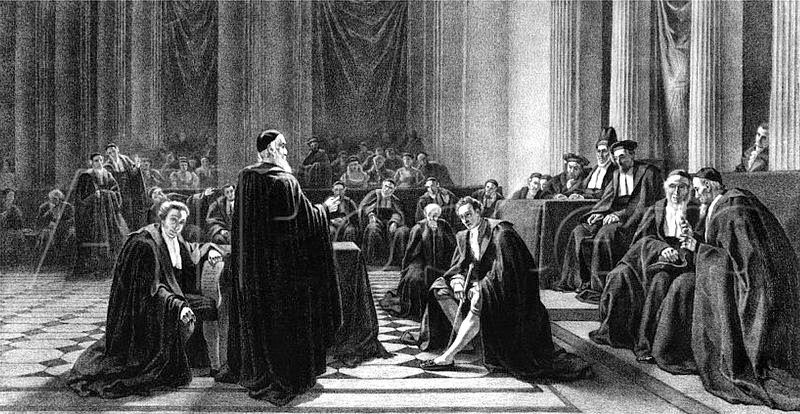
Jesus claimed to be the Messiah -the Chosen One and he also claimed to be the Son of God. This caused great concern to the religious leaders, as Jesus was young, not formally trained, and came outside of their established religious traditions. Inside Jerusalem the Sanhedrin met. The Sanhedrin was a religious court, where the spiritual leaders gathered to make their decisions.
Fear drove this group. Because it was Passover, the city was jammed with pilgrims and the political tension was at an all time high. The Jewish religious leaders feared that Jesus would spark a political rebellion -which would incite the Roman Army to enter the City.
In order to avoid the greater potential threat of an invading Roman Army, the Sanhedrin decided it was more expedient to get rid of Jesus.
Wednesday of Holy Week finds the plot to kill Jesus picking up steam. From the very beginning, the Jewish religious leaders set out to get Jesus.
Jesus claimed to be the Messiah -the Chosen One and he also claimed to be the Son of God. This caused great concern to the religious leaders, as Jesus was young, not formally trained, and came outside of their established religious traditions. Inside Jerusalem the Sanhedrin met. The Sanhedrin was a religious court, where the spiritual leaders gathered to make their decisions.
Fear drove this group. Because it was Passover, the city was jammed with pilgrims and the political tension was at an all time high. The Jewish religious leaders feared that Jesus would spark a political rebellion -which would incite the Roman Army to enter the City.
In order to avoid the greater potential threat of an invading Roman Army, the Sanhedrin decided it was more expedient to get rid of Jesus.
Tuesday, April 15, 2014
Holy Week 2014 -Confrontation Tuesday
Join us each day as we focus on the final week before Jesus' crucifixion.
The plot to arrest Jesus picks up steam as Judas agrees to betray Jesus. Luke 22.1-6 records Judas' trip to the Chief Priests and his agreement to betray his friend. For a while now, the religious leaders were looking for ways to trap and arrest Jesus. Judas' betrayal adds more fuel to the fire.
As Jesus was leaving the Temple on his way out of town he predicted that the Temple would be destroyed. He took this opportunity to also speak about the end times and that even he doesn't know the specifics of how it will all end.
The conspiracy against Jesus is well underway. From the perspective of the Pharisees, Jesus was just a young man: unschooled and uneducated. 'Who is the 33 year old kid, who makes these claims about being sent from God?'
Tuesday is marked by confrontation, as both sides are looking for ways to discredit the other. The tension is high, the city on edge, and the behind-the-scenes political maneuvering is in full force.
The plot to arrest Jesus picks up steam as Judas agrees to betray Jesus. Luke 22.1-6 records Judas' trip to the Chief Priests and his agreement to betray his friend. For a while now, the religious leaders were looking for ways to trap and arrest Jesus. Judas' betrayal adds more fuel to the fire.
As Jesus was leaving the Temple on his way out of town he predicted that the Temple would be destroyed. He took this opportunity to also speak about the end times and that even he doesn't know the specifics of how it will all end.
The conspiracy against Jesus is well underway. From the perspective of the Pharisees, Jesus was just a young man: unschooled and uneducated. 'Who is the 33 year old kid, who makes these claims about being sent from God?'
Tuesday is marked by confrontation, as both sides are looking for ways to discredit the other. The tension is high, the city on edge, and the behind-the-scenes political maneuvering is in full force.
Monday, April 14, 2014
Holy Week 2014 -Fig Monday
Join us each day as we focus on the final week before Jesus' crucifixion.
Christians call the day after Palm Sunday, 'Fig Monday.' On this day Jesus curses a fruitless fig tree and chases the corrupt people out of the Temple.
At first these two events seem unrelated and frankly, quite odd. But viewed together, we see that they are what is known as, 'an acted parable.'
In Mark 11, these event appear in this order:
Jesus curses the Fig Tree
Jesus cleanses the Temple
Jesus revisits the cursed Fig Tree
In this final week of Jesus' life, he comes to both the Fig Tree and the Temple -seeking fruit, seeking life, seeking nourishment. His physical hunger drove him to the Fig Tree, but since it was barren he cursed it. His spiritual hunger drove him to the Temple, but when he arrived it had been transformed into a commercial enterprise -and so he blasted it as well.
In this way we can see a link between these two events. What Jesus does to the Fig Tree he will do to the Temple. This story challenges us to ask the question, what would Jesus find if he came to our Churches, or into our homes? Would he find fruit? Would he find life?
Christians call the day after Palm Sunday, 'Fig Monday.' On this day Jesus curses a fruitless fig tree and chases the corrupt people out of the Temple.
At first these two events seem unrelated and frankly, quite odd. But viewed together, we see that they are what is known as, 'an acted parable.'
In Mark 11, these event appear in this order:
Jesus curses the Fig Tree
Jesus cleanses the Temple
Jesus revisits the cursed Fig Tree
In this final week of Jesus' life, he comes to both the Fig Tree and the Temple -seeking fruit, seeking life, seeking nourishment. His physical hunger drove him to the Fig Tree, but since it was barren he cursed it. His spiritual hunger drove him to the Temple, but when he arrived it had been transformed into a commercial enterprise -and so he blasted it as well.
In this way we can see a link between these two events. What Jesus does to the Fig Tree he will do to the Temple. This story challenges us to ask the question, what would Jesus find if he came to our Churches, or into our homes? Would he find fruit? Would he find life?
Labels:
Cursing the Fig Tree,
Cursing the Temple,
Easter,
Holy Week,
Jesus
Friday, March 30, 2012
The Triumphal Entry: The Story Behind The Story
Jesus’ entry into Jerusalem is one of the most memorable accounts of Easter week. He enters the city riding a colt -to the cheers and delight of the massive crowds. People are waving palm branches and throwing their coats on the ground. It is a moment filled with awe and expectation. Curiously, it is only Luke who records that Jesus wept as he entered the city.
We can see the faces, imagine the crowd, and hear the shouts: ‘Hosannah, blessed is He who comes in the name of the Lord!’
But have you ever thought, ‘What is really going on?’ ‘What is the story behind the story?’ It turns out that what Jesus is doing has been done before!
Alexander the Great’s death in 323BC brought chaos to the Greek Empire. He didn’t leave a successor and the Empire eventually split into four territories. One faction was the Seleucid Dynasty which ruled most of the Middle East. The Seleucids propagated the Hellenization of their territories -to the dismay and disgust of the Jewish people.
The Seleucids Dynasty filled Israel with altars to the Greek gods and levied taxes to support their worship. They banned the Torah and even placed an idol of Zeus in the Jewish Temple.
Finally the Jewish people wouldn’t take it anymore. A priest by the name of Mattathias led a revolt in 167 BC. He died while fighting the Seleucids and his son Judah took up the cause. Judah Maccabee use guerilla warfare tactics to eventually overthrow the Seleucids from Israel. The festival of Hanukkah -(the Festival of Lights) originates from this time period. You can read more about this account in the book of 1 Maccabees.
With victory assured Judah did two things in rapid succession. First he entered the city of Jerusalem -to the cheers and praises of its inhabitants. Once in the city he went immediately to the Temple and cleared out all the idols.
Flash forward 190 years. The Greek-leaning Seleucid Dynasty is long gone. The Maccabean rule lasted until the Roman General Pompey captured Jerusalem in 67BC. Once again Israel finds itself under occupation.
When a Roman General -fresh from victory in battle- would enter a capital city, he followed a specific plan. The plan called for the general to wear garments signifying his deity. He would ride either a chariot or a war-horse and was followed by those captured in battle. The general would immediately proceed to the temple and offer a sacrifice. This victory procession -spelled out in Roman Law- is called a ‘Triumph!’
Pause for a moment and think of Jesus entering Jerusalem in preparation for his final Passover Meal. He knows the history and the culture of his people. He undoubtedly knows that less than 200 years earlier Judah Maccabees followed this same plan (entry into Jerusalem and clearing out the Temple). He undoubtedly knows that the Romans had a similar triumphal entry and that -more than likely- Pilate himself had just days before entered Jerusalem in his own modified Triumph!
Now comes Jesus. He uses the history and culture of his day and replaces it with his own twist. He doesn’t ride on a war horse like Judah Maccabees or the Roman Generals; he rides a colt. He doesn’t carry a sword, but rather speaks the Word of God. He doesn’t wear the garments of a victorious general, but rather of a humble worker. He doesn’t come to offer political freedom, but rather spiritual freedom. He doesn’t come to free Israel from the oppression of other nations; rather he comes to liberate all people from the oppression of sin!
The story behind the story shows us that when we dig into God’s Word we are continually rewarded with deep and profound Truths. Jesus replaces and fulfills the cultural expectations of his time and uses them to show how God is doing something new! During this Holy Week, why don’t you read through the accounts of Jesus’ triumphal entry and send in your comments...
Subscribe to:
Posts (Atom)